

WALKING WITH WORDS
and conversations with cities

Have you ever felt that Mumbai is constantly in conversation with its inhabitants?
Through its ever-changing built form and the juxtaposition of old and new, sweeping flyovers and crawling traffic, surviving trees and the state of its rivers, the kinetic city is always trying to tell us something.
Every day, it emanates an energetic cry, raised to the rhythm of the moving local train. It brags about its architectural heritage through the glowing facade lights on its historic buildings, as they beam against the dark night sky. Often, through the sounds of blaring horns and moving vehicles, it relays the speed at which it transforms.
Sometimes, one can hear the city’s heartrending lament that accompanies the thuds of the gigantic drill machines that pound into the earth at a construction site. Late at night, it lets out a suffocated sob, as sea waves lash against the gigantic tetrapods that border its coastal edge.
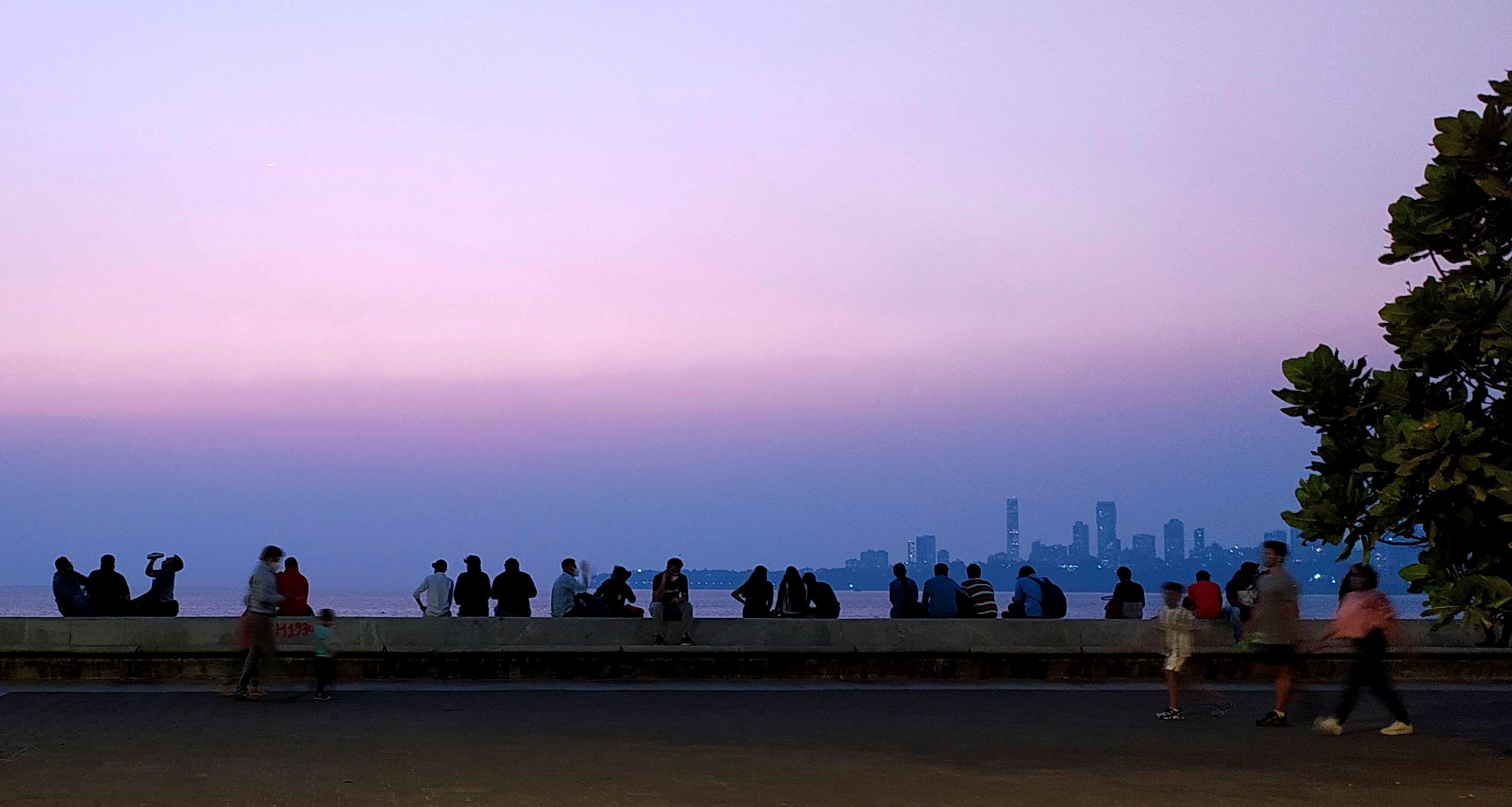
What is the city trying to tell us?
Is it drawing our attention to the stories of the past, which lay hidden in plain sight in heritage architecture around it? Is it leading us to observe the remnants of its older settlements and take lessons from small community spaces and welcoming house forms? Is it pointing to the stark disparity that lies in the lives of people who move above the flyover, and those who live below them? Or is it just tired of carrying the burden of moving and housing multitudes across the city, as they hustle to make a living and a life?
For a long time, I was oblivious to these sounds, these wordless conversations that the city is constantly trying to establish. It was only when I slowed down and started walking around the city, that I finally discovered and decoded them.
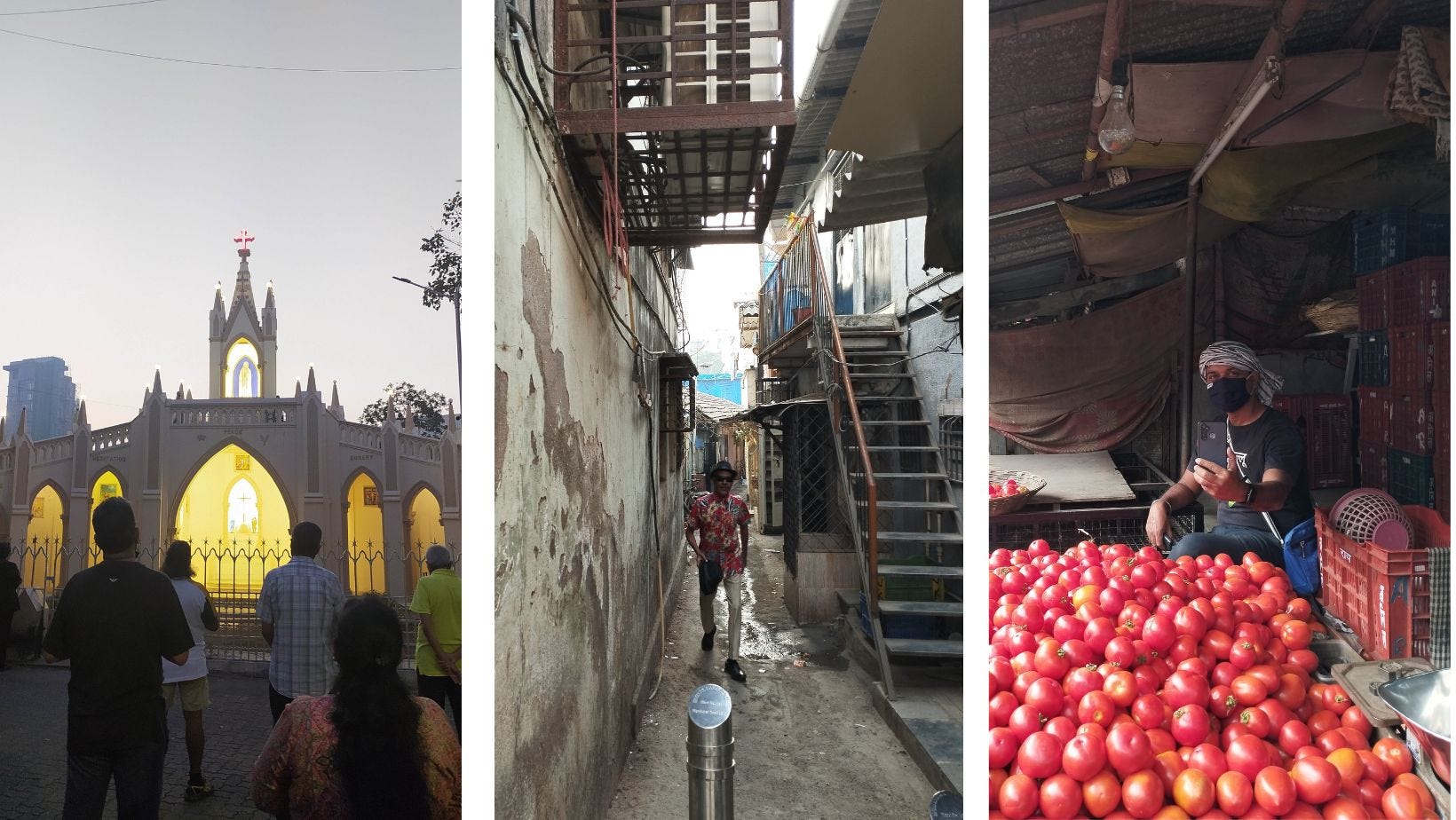
At first, the city spoke in a loud cacophony, but slowly and surely, as I walked and discovered the city, one building, one lane, one neighbourhood at a time, the noises slowly faded away. As I de-layered the different dimensions of built form through sensory perception, socio-cultural factors and temporality, the conversations became clearer, helping me focus, observe and scribble notes and sketches in my pocket sketchbook, and capture moments of the ephemeral city in my phone camera.
I discovered that the city is indeed a living museum, with millions of stories hiding in plain sight, and that I could converse with the city through images and words…
Words have been my friends for many lifetimes. I love everything that words can do - literature, poetry, letter-writing, postcards, song lyrics. Childhood pastimes thus included reading, penning poetry and essays. As an architect, I admired the art of lettering, calligraphy and signage design and often studied etymology to understand meanings behind names of people and places.
The voices of Mumbai brought together my two great loves - walking and words.
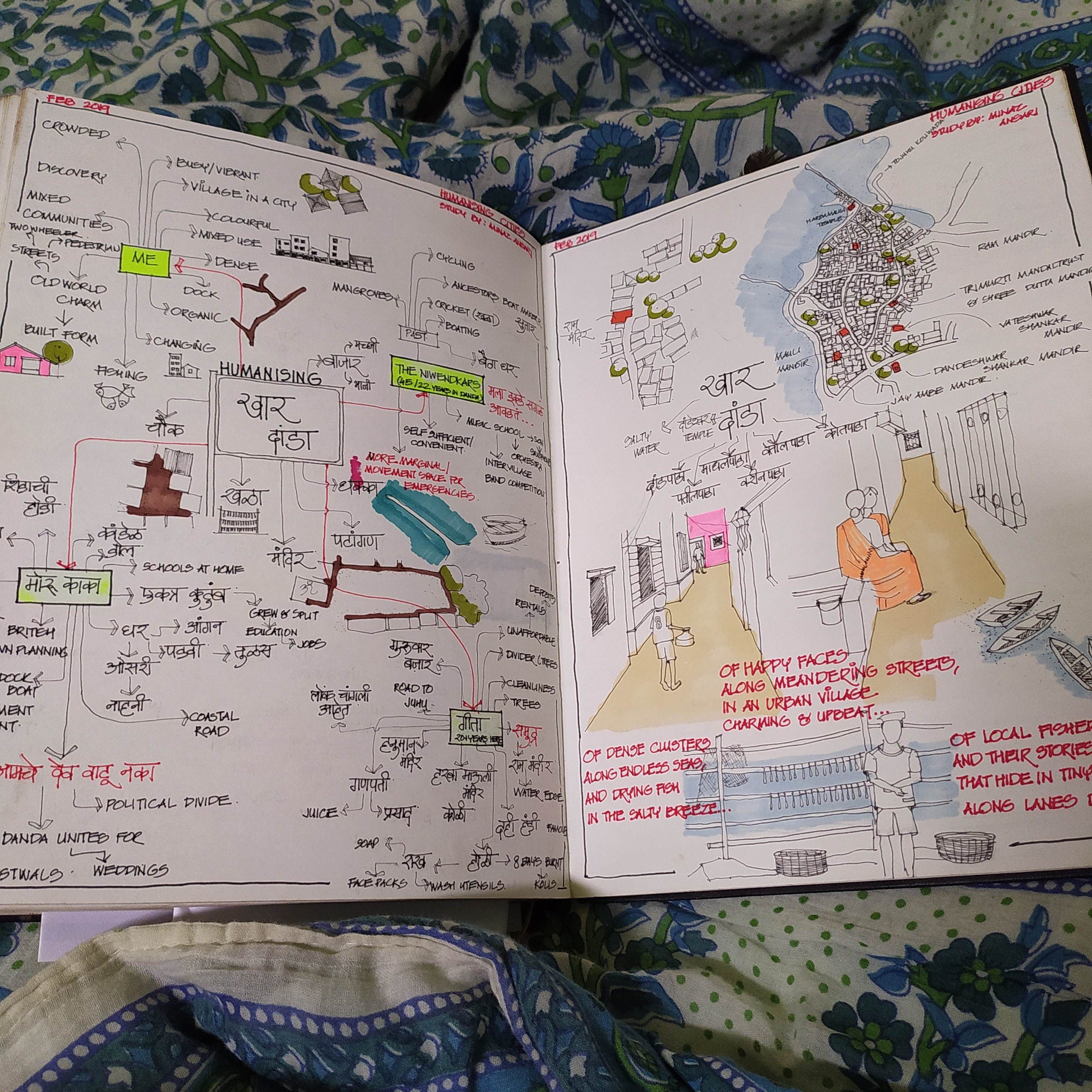
I sought refuge in words to express everything that the city was constantly trying to tell me. I wrote curatorial notes for exhibitions around Mumbai's water narratives and research papers on art and culture in Mumbai. I wrote essays with great passion on Substack to introduce a global community of readers to the finer nuances of Mumbai. Some essays threw light on the Christmas celebrations and bakeries in Bandra, the beautiful monsoons in the city, and the indomitable spirit of the city along the sea. Images inspired a City Haiku series that I published on Substack.
Yet, all this while, my true conversations with the city were coming together in the form of a book.
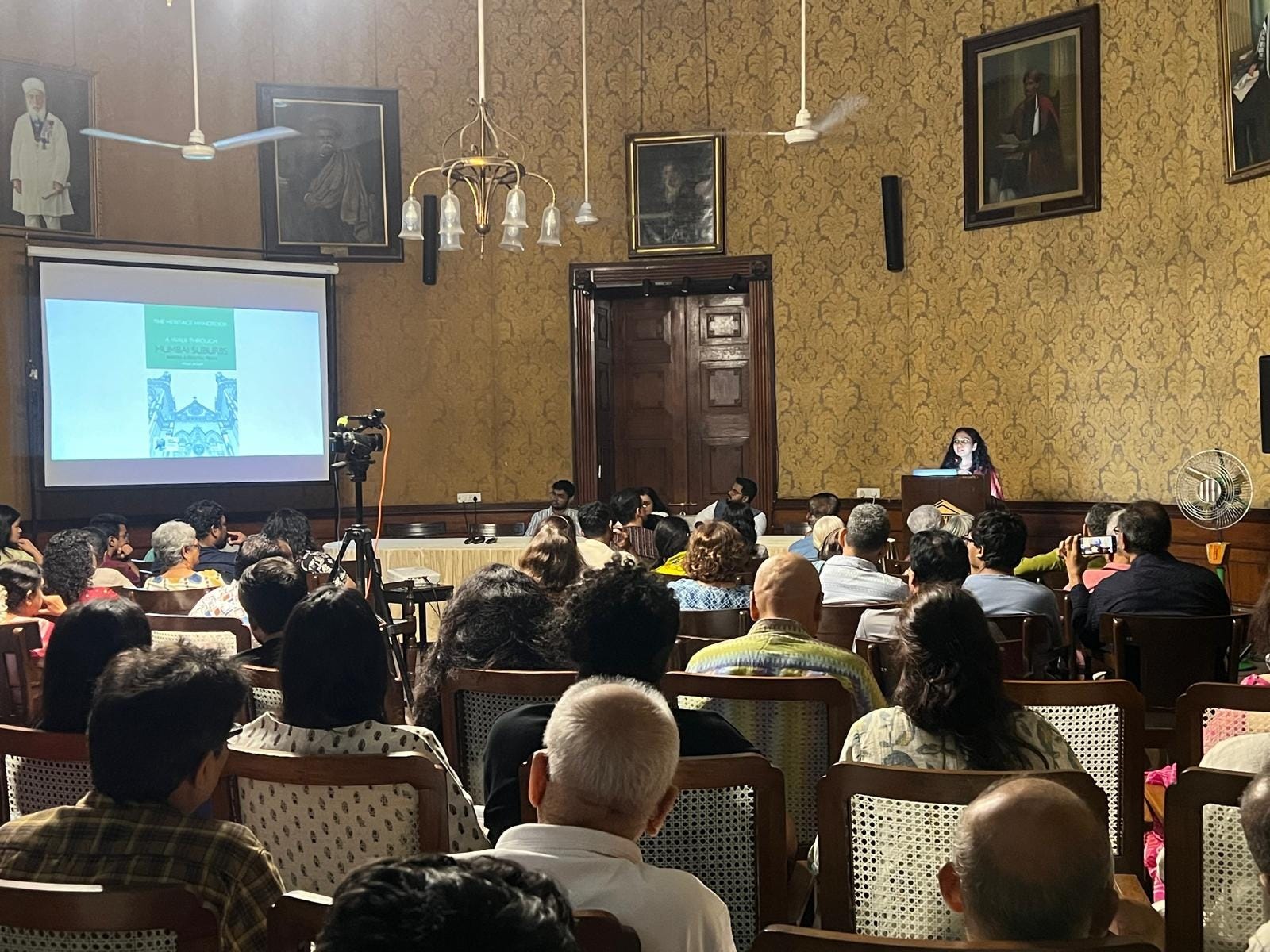
Last week, in the majestic hall of a heritage library in Mumbai, my book, WALKING THROUGH MUMBAI SUBURBS - BANDRA AND COASTAL TRAILS was launched. As I stood there reliving the six year long journey of writing this book, I felt like I was speaking not for myself, but on behalf of this city that I have come to love more and more as I continue to walk through its crowded streets, listening to all that it has to say.
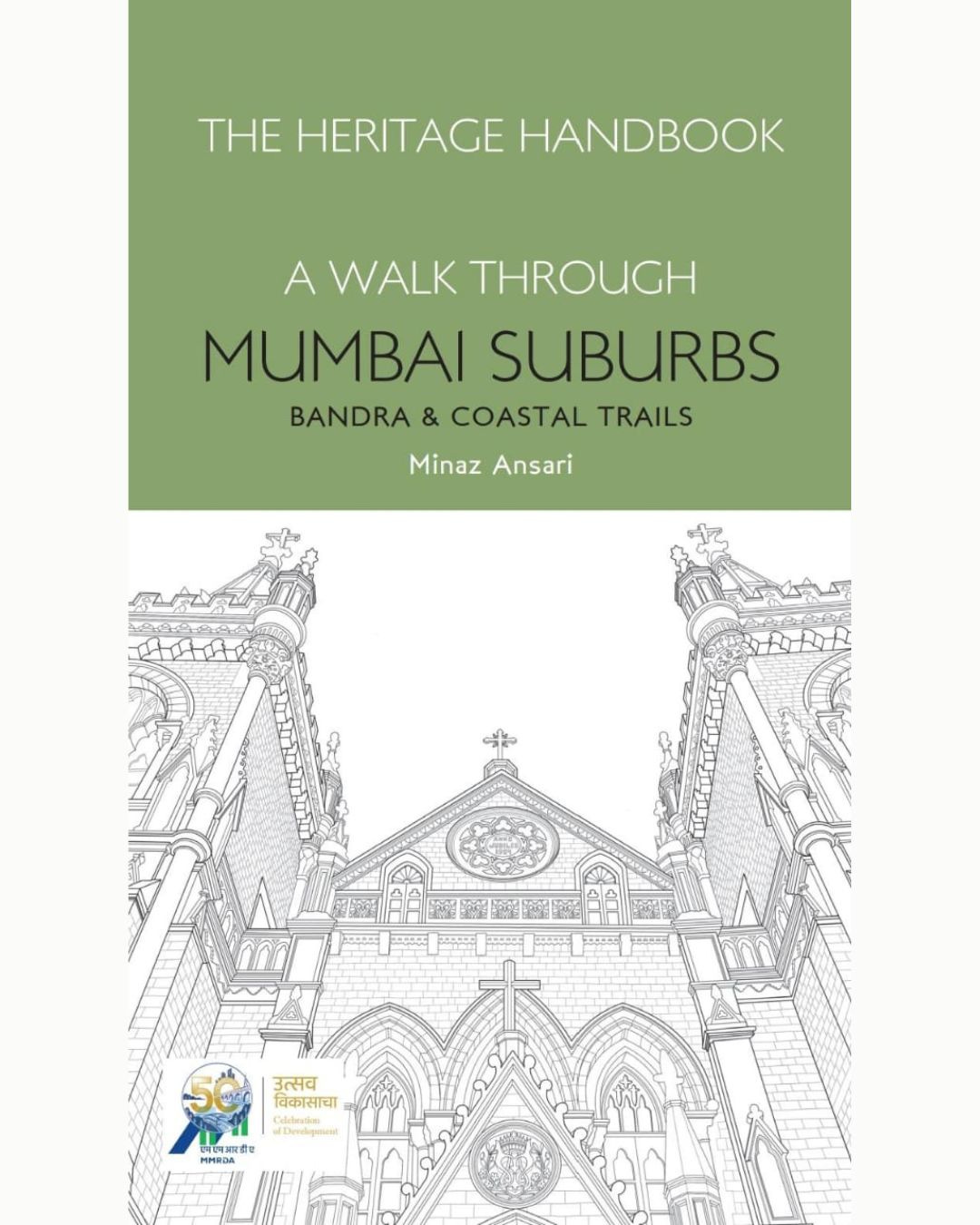
To explore the vast heritage of Bandra and Mumbai suburbs, ranging from Buddhist monasteries to Portuguese churches, Parsi agiaris to coastal villages, put on your walking shoes, grab a copy of the book and explore these heritage sites; and when you are out and about in the city, keep your senses piqued, and listen carefully.
Mumbai will pour out its heart to you.
A warm welcome to all new subscribers and thank you to those who have been along my writing journey for longer. I love connecting with my readers. Do share your thoughts in the comments section.
Every post I share is a labour of love and an attempt to spread love. If you wish to support independent writing, buy me a book.

That pic of two pages of your sketchbook are testimony to the depth of your research ! You have honestly listened and understood , as the city has spoken.
It's beautiful.. the words, thoughts and how you flow with the idea!! Lovely sketchbook Minaz ❣️
Congratulations on becoming and author and for your book... 🌼